Andrea Argudo | Technical Product Manager
Product Owner in financial systems — data platforms driving product & AI
If the problem isn’t defined, you’re just building — with no direction and no impact
What I do when things break
-
Cut scope when it doesn’t move the business
-
Bring engineering in early — not just to build
-
Force clarity before agile delivery (Scrum y Kanban)
What this looks like in practice

Business (Revenue & Efficiency)
↑ Revenue / ROI
↓ Operational costs: ~20%
↑ Avg ticket size: ~13%
Product (Conversion & UX)
↓ Drop-off: 15–25%
↑ Deposits: ~20%
↓ Transaction time: ~30%
System (Reliability & Cost)
0 critical incidents
↓ Infra costs: ~40%
↓ Latency: ~200ms
© 2026 Andrea Argudo. All rights reserved.
This material is original and protected under international copyright law.
Any unauthorized reproduction, distribution, resale, or public disclosure — in whole or in part — is strictly prohibited and may result in legal action.
If you wish to use this content in any form, you must obtain prior written consent.
Contact: argudoandrea@gmail.com
What I sacrificed. What failed. What I risked.
They blamed slow developers — the real product wasn’t defined

Context
Joined to fix delivery issues — real problem was no product definition.
PRDs were incomplete, unrealistic, and built without engineering input.
Team was expected to deliver without clear scope or context.
Friction
Pushed to involve engineering early — strong pushback from Head of Product.
Escalated misalignment to VP after continued delivery issues.
Decision
Reframed problem from execution to product clarity.
Aligned product, design, and engineering on scope and feasibility.
Outcome
Took ownership during leadership gap (~25 people).
Delivered first release after ~12–18 months of inactivity within 3 months.
Adjusted strategy due to market constraints, shifting focus to engagement.
€30K/day losses or €40K/month — I had to choose
Context
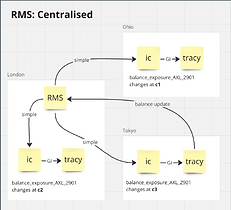
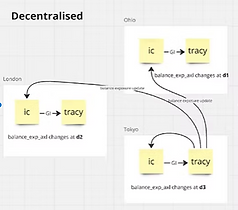
Reduced infra costs by ~20% vs 40% target by reprioritizing under production pressure. Faced concurrent objectives: cost reduction vs critical incident support (up to €30K/day loss).
Decision
Chose to prioritize business continuity over cost targets, preventing ~€150K+ short-term losses.
Execution
In parallel, led gradual migration from monolith to microservices to reduce latency for HFT users, under strict low-activity deployment windows.
Optimized data/storage costs by deprecating unused order book datasets and migrating critical data to lower-cost infrastructure after cross-team validation.
No product, no delivery — I shipped and monetized anyway
Hired to grow it — it had to be shut down


Context
Initial brief was delivery and stakeholder alignment.
Actual objective (discovered later): exit users safely, reduce costs, and reuse what was possible in HeyTrade
Decision
Stopped all growth work and focused on:
user offboarding (withdrawals), compliance, and cost reduction.
Execution
Gradually shut down infra, third-party providers, and reduced team.
Operated with no clear direction initially — had to figure out real priorities while executing.
Only partial reuse in new platform (backoffice rebuilt; most blocked by compliance).
Outcome
Closed product without incidents, users exited safely, costs reduced.

Context
Joined as Product Owner for delivery — no clear product definition or market problem.
Took ownership of problem definition, strategy, and execution end-to-end.
Built electronic money / crypto custody platform for high-value clients (miners, Middle East).
All data and transactions encrypted — zero exposure, no identity leakage.
Friction
Security vs speed — constant trade-off.
Initial timeline: 6–8 months → extended to ~12 months.
Repeated delays from testing:
-
new attack vectors
-
wallet manipulation risk (fund theft)
Regulatory constraints (Coinbase) limited scope (crypto only, capped operations).
Decision
Prioritized security over UX, scalability, and speed.
Delayed release to:
-
secure private key management (split + encrypted)
-
prevent wallet override risks
-
enable user fund recovery without platform dependency
Deprioritized non-critical features.
Outcome
Launched after ~12 months under strict security constraints.
Mitigated critical vulnerabilities before and after release.
Delivered secure custody platform for real funds under regulatory limits.
Regulation blocked growth — I kept it alive

Context
Core features (deposits/withdrawals) blocked by MiCA licensing.
Users reduced exposure due to market volatility.
Liquidity issues impacted trading and token value.
Friction
No way to increase revenue due to regulatory constraints and risk-off user behavior.
Team reduced under pressure. Core monetization blocked.
Decision
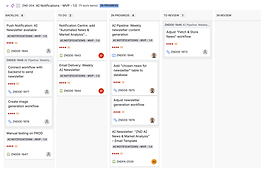
Shifted to GenAI-driven engagement — capturing value over waiting for monetization.
Prioritized engagement over revenue and GenAI over other bets.
Split teams between compliance (deposits/withdrawals) and engagement (GenAI).
Execution
Built infrastructure and data pipelines (15 sources).
Launched GenAI with multilingual personalization, market sentiment, and AI-generated content.
Manual setup (no APIs) slowed delivery.
Outcome
~10% engagement increase (target 15%).
Product live under regulatory and market constraints.
Operating under continued uncertainty (team restructuring, product direction).
Client wanted real-time ML on competitor data — I said no


Context
Data was fragmented across multiple sources — no unified platform, not scalable.
Built AWS platform to unify data and reduce reporting from ~8h to same-day.
Scaled from ~10 to 25 clients, ~20–25% ROI improvement.
Friction
Stakeholders pushed for real-time ML and competitor data via scraping.
Models had delay — not possible due to model limitations in 2020.
Decision
Monetized ML use cases underpriced and not real-time — capturing value over waiting for something not feasible.
Measured cost per use case and monthly operational expenses.
Pushed back — not technically feasible and high compliance risk (fines, API blocking).
No real-time due to model + data limitations.
Rejected competitor data approach (scraping) due to legal and API blocking risks.
Shifted to big clients, deprioritized SMEs.
Sold underpriced to grow fast. Took on data and tech debt.
Outcome
Platform wasn’t sustainable long-term.
High costs vs revenue. Needed public funding.
Not everything worked. Not everything was worth doing.